
Luna
dog · cute
Perfect names for pets and companions — from cuddly pups to legendary dragons.
Animal type
Vibe
Gender (optional)
Click Generate to start ✨
dog · cute
horse · fierce
fantasy · mythical
Guide
This generator covers naming across species, from dogs and cats through to horses, rabbits, birds, reptiles and farm animals. Filter by animal type, gender and style, and it will produce a fresh batch each time. Below the tool is the part that actually matters: how different animals process sound, which names each species learns fastest, and how to rename an animal that arrived with a name you did not choose.
The single most useful thing to understand before naming any animal is that they are not hearing what you are hearing.
Humans pick up roughly 20 Hz to 20 kHz. Dogs extend to somewhere around 45 kHz. Cats reach approximately 85 kHz, one of the widest hearing ranges of any land mammal. Horses sit around 33 kHz. Birds, by contrast, hear a narrower band than we do, roughly 200 Hz to 10 kHz, but they are considerably better than us at distinguishing rapid changes within it.
This has a direct practical consequence. Sharp, high-frequency sounds — s, sh, ch, k, and a bright ee ending — sit comfortably inside the range where dogs and cats hear most acutely. Low, soft, trailing sounds do not. It is why Missy, Ziggy, Biscuit and Peaches carry across a garden while Bob, Gore and Bruno need more effort behind them.
For birds, the opposite emphasis applies. Parrots and mynahs respond to rhythm and repetition far more than to frequency, which is why two-syllable names with a strong beat, like Kiwi, Rio and Pepper, are so widely used with them.
Four rules hold regardless of what animal you are naming.
One or two syllables. Short names cut through noise and are quicker to react to. Long names get shortened whether you plan it or not, so if you love a long name, make sure the short form is one you also like.
Nothing that rhymes with a command. This is the mistake that causes the most long-term trouble and almost nobody considers it in advance. Kit sounds like sit. Bo sounds like no. Jay sounds like stay. Every time you use the name, the animal has to work out which you meant.
Nothing that clashes with another animal in the house. Max and Jax means both look up every time. So does Bella and Stella. Choose different opening consonants and different vowel sounds.
Test it at real volume. Say the name the way you would call across a field, then the way you would say it at eleven at night, then the way you would say it at a vet's reception desk with strangers listening. Some names survive all three.
Dogs learn names faster than any other common pet. A puppy given consistent, positive repetition usually responds within days. Names ending in a vowel or a hard consonant work best, and dogs respond particularly well to a rising, upbeat delivery.
Cats absolutely recognise their names, though whether they choose to act on that is a separate matter. Cats respond well to sibilant and high-frequency sounds, which is why so many cat names end in an ee sound. Ours is the species where naming for personality pays off most, because a cat's character is usually obvious within a fortnight.
Horses typically carry two names. The registered or stud name appears on the paperwork and is often long and formal. The barn name is short, usually one or two syllables, and is what the horse actually learns. Horses respond strongly to tone, so a name that sounds calm when spoken quietly is worth more than a dramatic one.
Rabbits and guinea pigs respond more to routine and to the sound of a food container than to a name in isolation, but they do learn to associate a specific sound with attention. Short, repeated names paired consistently with food work best.
Birds vary enormously. Budgies, cockatiels and parrots can learn to say their own names and often will, so choose something you are happy to hear repeated at volume for twenty years. Rhythm matters more than frequency here.
Reptiles and fish do not learn names in any meaningful sense. Name them for yourself, which frees you up to be as elaborate as you like.
Farm animals are more responsive than most people assume. Cattle, goats and sheep learn to associate a specific call with feeding, and dairy herds in particular are often named individually. Our lists of cow names and goat names go into this in more detail.
If your animal is pedigree or competing, formal naming rules probably apply and they are worth knowing before you become attached to something.
Kennel clubs across most countries cap the length of a registered name and require the breeder's kennel prefix or affix to appear in it. That is why registered names run to things like Ravenswood Midnight Serenade of Ellerby while the dog is simply Sadie at home.
Thoroughbred racing is stricter still. In the United States, The Jockey Club limits names to 18 characters including spaces and punctuation, requires every name to be submitted for approval, and refuses names that duplicate active or notable horses. A meaningful proportion of submissions are rejected each year.
Cat registries, competitive rabbit organisations and livestock herd books all operate similar systems. If any of these apply to you, check the rules before you settle on a name rather than after.
Plenty of rescue animals arrive with a placeholder a shelter volunteer chose in five seconds. There is no obligation to keep it, and renaming is far easier than most people expect.
Consistency and pairing are what matter. Use the new name only when something good is about to happen — food, a walk, a toy, attention — and use it in short, cheerful bursts many times a day. Most dogs and cats respond reliably within one to two weeks.
If the old name shares a sound with the new one, the transition is quicker still. Bruno to Bruce, or Sadie to Sasha, gives the animal a familiar shape to hold on to.
And if the old name has bad associations, which does happen with animals from difficult backgrounds, a complete change with an entirely different vowel sound can genuinely help. Start fresh and do not look back.
Dogs and cats clearly do. A 2019 study published in Scientific Reports found that domestic cats responded differently to their own name than to similar-sounding words, even when a stranger spoke it. Dogs learn names faster still, with research placing the average dog's working vocabulary at around 165 words. Horses respond reliably to their names too. Rabbits, guinea pigs and most reptiles respond more to routine, tone and the sound of a food container than to the name itself.
One or two syllables for almost every species. Short names cut through background noise and are far easier for an animal to isolate from ordinary speech. Longer names get shortened in daily use anyway, so if you love a long name, make sure you also like its short form.
Sharp, high-frequency consonants such as s, sh, ch and k, and names ending in a bright ee sound. Cats hear far higher frequencies than humans do, and dogs are not far behind, which is why names like Missy, Ziggy, Biscuit and Peaches carry so well across a room or a field.
Avoid anything that rhymes with a command you will use. Kit sounds like sit, Bo sounds like no, Jay sounds like stay. Also avoid names that share vowel sounds with another animal in the household, because both will respond to either and recall training becomes much harder.
Use the new name only when something good is about to happen, such as food, a walk, a treat or attention, and use it in short cheerful bursts many times a day. Most dogs and cats respond reliably within one to two weeks. Choosing a name that shares a sound with the old one, such as Bruno to Bruce or Sadie to Sasha, speeds the transition further.
Pedigree animals often carry two names. The registered name is the formal one on the paperwork, usually incorporating the breeder's kennel or stud prefix, and is frequently long and elaborate. The call name is the short everyday name the animal actually learns. A dog registered as Ravenswood Midnight Serenade is simply Sadie at home.
Yes, and they are strict. In the United States, The Jockey Club limits thoroughbred names to 18 characters including spaces and punctuation, and a name cannot duplicate that of an active or notable horse. Names must be submitted for approval, and a proportion are rejected each year.
After, if you can wait. Young animals change enormously in their first few months, and a name chosen from a photograph often stops fitting once you meet the actual personality. Live with two or three options for a week and see which one you reach for without thinking.
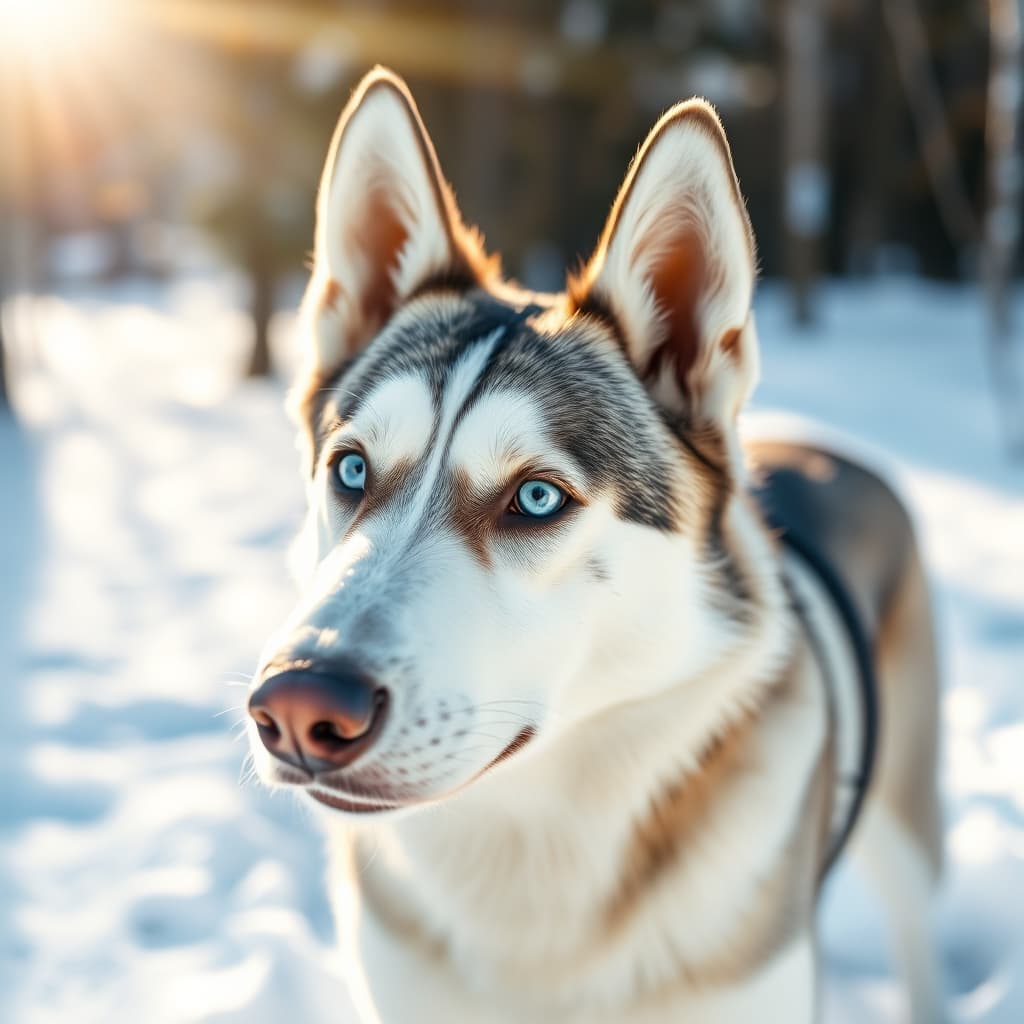
Find the perfect call name for your Siberian or Alaskan Husky with our expert guide featuring over 700 male, female, cute, winter, and unique ideas.
Read article →