James Smith
Western · male
Realistic first and last name combinations from regions around the world.
Gender
Region
Click Generate to start ✨
Western · male
Asian · female
Middle Eastern · male
Guide
This generator produces a fresh set of names at random, drawn from a curated pool rather than assembled letter by letter, so everything it returns is a name a person could plausibly have. It is built for the moments when you do not know what you are looking for yet: naming a character, filling a spreadsheet with test data, running a giveaway, or breaking out of a naming rut where every idea has started to sound the same. Below the tool is guidance on using randomness deliberately, choosing names for fiction, and generating safe placeholder data.
A random name generator sounds like a novelty until you hit one of the situations it solves properly.
Fiction and screenwriting. Naming a minor character is a small decision that stops you mid-sentence and derails a writing session. Generating a handful, picking one, and moving on is worth more than getting it perfect. For period-accurate given names, the baby names generator is a better fit when you know the era and origin you need.
Tabletop roleplaying. A game master needs a name for the innkeeper immediately, not after a five-minute deliberation, and the pause breaks the scene.
Placeholder and test data. Developers and designers filling out a database, a mockup or a user interface need names that look plausible without belonging to anyone real. The same applies when you need to name fictional companies in a prototype — the business names generator handles that case specifically.
Teaching materials. Worksheets, examples and case studies all read better with varied names than with the same three used repeatedly.
Breaking a naming rut. This is the underrated one. When you have been staring at name lists for an hour, every option starts to look identical. A random batch pulls in candidates you would never have searched for, and that is often exactly what unsticks the decision.
Most people use a generator badly. They hit the button, look at each name in turn, reject them all individually, and conclude the tool does not work.
Here is a better method.
Generate in batches, judge later. Produce fifteen or twenty at once. Copy out anything that catches your eye without deciding whether you like it yet. Your first instinct at this stage is a filter, not a verdict.
Run three batches before comparing. The first batch always looks wrong. That is not the generator, it is your eye adjusting after however long you have spent on other names. By the third batch you are seeing them properly.
Look at your shortlist as a group. If you are naming several things at once — characters, teams, products — the relationship between the names matters more than any individual choice. Lay them out together.
Say the finalists out loud. A name that works on screen can be unpleasant to say. This takes ten seconds and it is the test people skip most often.
If you are naming characters, a few craft principles will save you from problems that only surface at the editing stage.
Vary the first letter. Readers track characters largely by initial and word shape. Two characters called Marcus and Martin will blur together for a hundred pages and your readers will quietly stop distinguishing them. Lay every name in your manuscript out in one list and check for collisions.
Vary the syllable count and rhythm. If every character has a crisp two-syllable name, the cast flattens. A mix of Jo, Marguerite and Bell reads as a cast. Jo, Kate and Tess reads as one person seen three times.
Match the name to the setting. A name has a period and a place attached whether you intended it or not. Jennifer belongs to a specific handful of decades. So does Mildred. If your novel is set in 1890 or 2140, that mismatch will pull an attentive reader out of the story.
Give the important characters the more distinctive names. Attention is finite. Spend it where the reader will need it.
Search the full name before you publish. If your antagonist shares a full name with a real, identifiable person, that is a problem worth catching early. Publishers run these checks as standard. If you are publishing commercially and something looks close, take professional advice rather than guessing.
For developers, designers and anyone building something that displays people, generated names solve a real problem.
Copying real customer records into a staging or test environment is common and it is a genuinely poor practice. Test environments almost always have weaker access controls, less monitoring and more people with access than production does. Synthetic names sidestep the whole issue.
A few practical points:
Worth being precise, because the word gets used loosely.
This generator is pseudorandom. An algorithm produces a sequence that is statistically unpredictable for practical purposes, but it comes from a formula rather than from a physical random process like atmospheric noise or radioactive decay. Nearly every generator on the web works this way.
For naming a character or filling a spreadsheet, the distinction is irrelevant. For anything where security depends on unpredictability — passwords, cryptographic keys, tokens — it matters enormously, and a name generator is not the right tool.
The other thing worth knowing is that the names come from a curated pool rather than being assembled letter by letter. Letter-level generation produces unpronounceable strings that are useless for almost everything. Drawing from real names means every result is something a person could plausibly be called, which is what makes the output usable.
If you want the opposite — invented names that sound like they come from somewhere that does not exist — the fantasy names generator is built for that instead.
The most common uses are fiction and screenwriting, tabletop roleplaying, placeholder data for developers and designers, giveaways and draws, teaching materials, and simply breaking a creative block when every name you think of sounds the same. It is also widely used by people who want a name suggestion without having to define what they want first.
They are pseudorandom, which is what almost every generator on the web produces. A pseudorandom algorithm generates a sequence that is statistically unpredictable for practical purposes but is ultimately produced by a formula rather than by a physical random process. For choosing a character name it makes no difference at all. For cryptography or anything where security depends on unpredictability, it would matter enormously, and you should not use a name generator for that.
Yes, and writers do this constantly. The one thing worth doing before you publish is a quick search on the full name to check it does not belong to a real, identifiable person, particularly if your character does something unflattering. Publishers routinely run these checks. If you are publishing commercially and have any doubt, ask a professional rather than relying on a search.
Generate in batches of fifteen or twenty and pull out anything that catches your eye, without judging it yet. Do that two or three times, then compare your shortlist. Judging each name as it appears is slower and produces worse results, because the first few always look wrong before your eye adjusts.
Yes, and using generated names is far better practice than copying real customer records into a test environment. Synthetic data avoids exposing real personal information in systems that are typically less protected than production. Just make sure placeholder data never reaches a live database, and label your test records clearly so nobody mistakes them for real ones.
Because the generator draws from a curated pool of actual names rather than assembling random letters. Letter-by-letter generation produces unpronounceable strings that are useless for almost every purpose. If you want invented, otherworldly names instead, the fantasy names generator is built for exactly that.
Vary three things deliberately: the opening letter, the syllable count, and the rhythm. Readers track characters largely by first letter and shape, so two characters called Marcus and Martin will blur together for a hundred pages. Lay all your names out in a single list and look at them together rather than choosing each one in isolation.
A name generator is not the right tool for that, because it produces names rather than selecting from your actual entrant list. For a genuine draw you need a tool that picks from the entries you supply. Use this generator for naming things, not for choosing between real people.
In this article, we unveil over 800 best elf names from cute and mischievous to uniquely creative that will not only personalize your festive celebrations but also inspire joy and laughter.
Read article →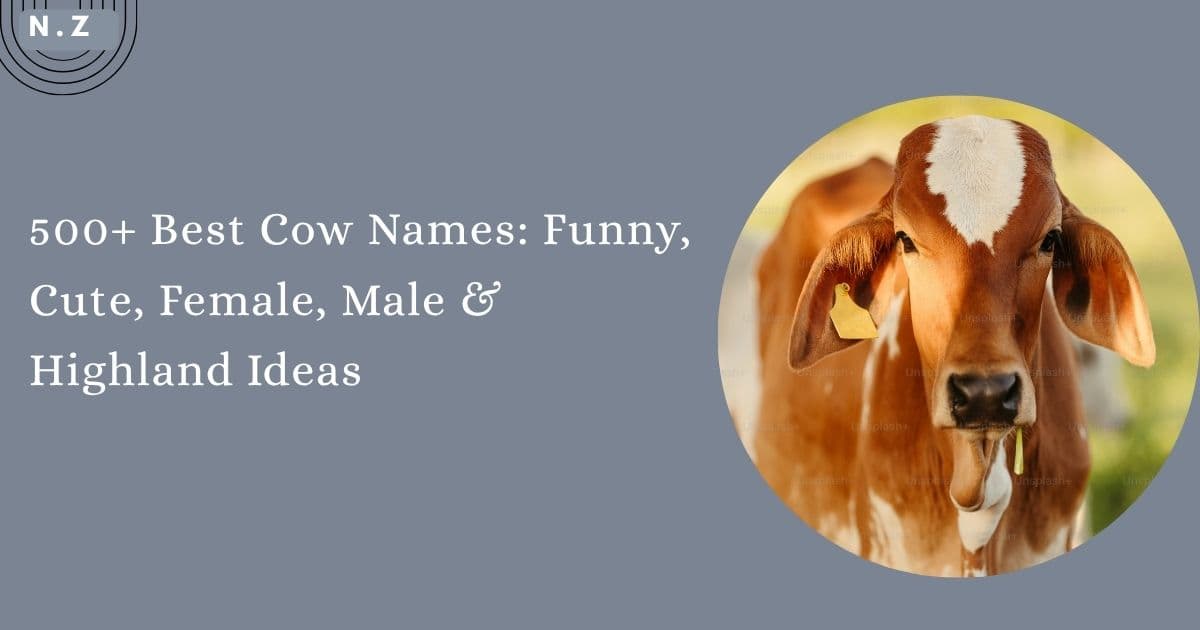
In this article, we delve into the 500+ best cow names ranging from funny and cute to gender-specific options and Highland-inspired ideas.
Read article →